

- By Admin
- 09 Nov, 2026
Short answer: AI video production means using AI tools to script, generate, edit, voice and resize videos, with people directing and checking the work. It suits ads, reels, product videos and festive campaigns that need many versions quickly. It does not fully replace real filming for faces, food, places and testimonials. In 2027 the best results come from mixing AI with real footage.
A year ago, most businesses saw AI video as an experiment. Today, AI video production is a practical way for restaurants, clinics, retailers and service brands to make more video without booking a full shoot every week. Platforms reward fresh, frequent short video, and AI makes that pace affordable.
This guide explains what AI video can do, where it still falls short, what to expect going into 2027, and how to start without wasting money.
What Is AI Video Production?
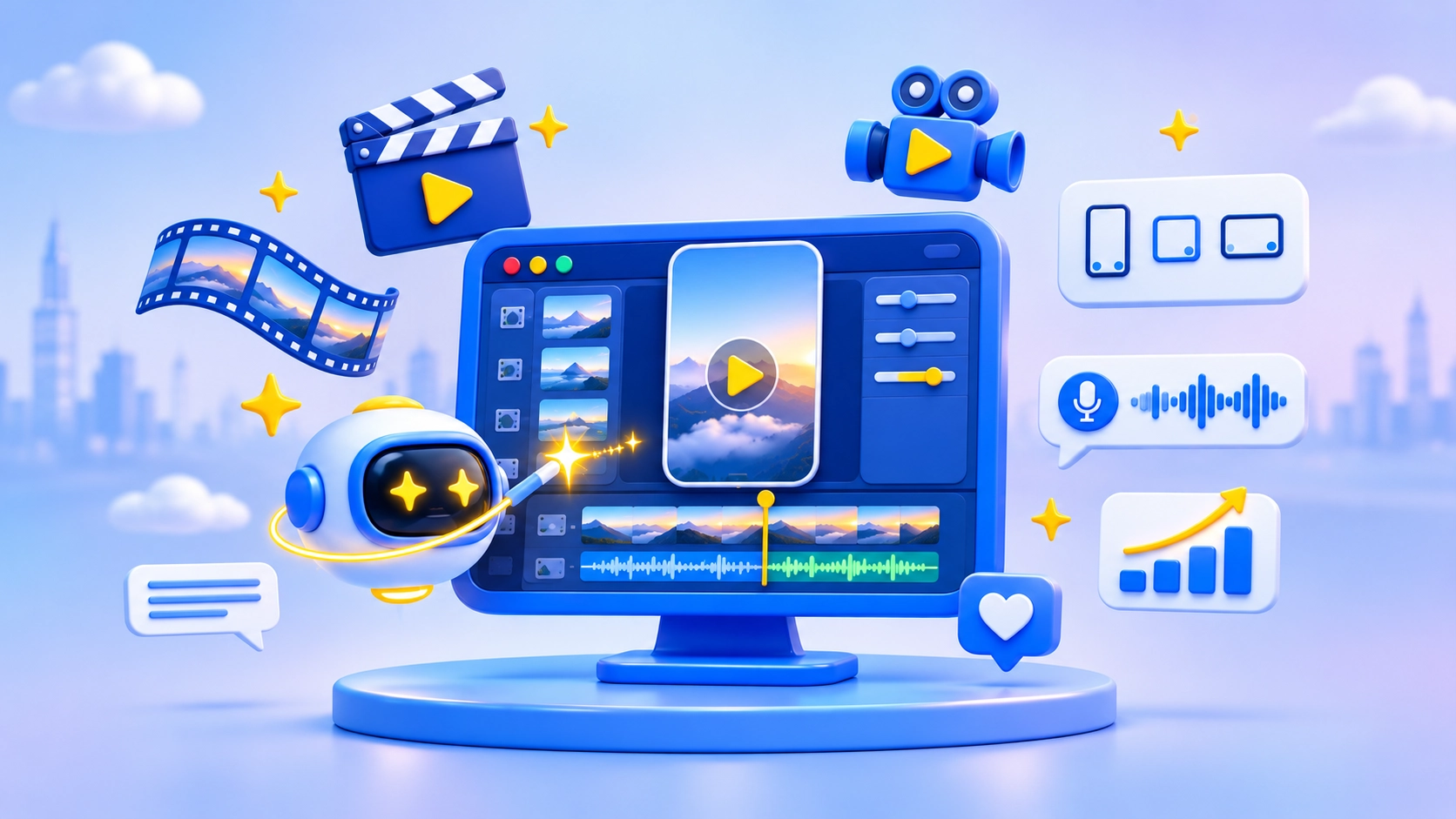
AI video production uses software to handle parts of the video process that used to take a crew and several days. Depending on the project, AI can:
• Draft scripts, hooks and captions from a brief
• Generate scenes, product shots or backgrounds from text or images
• Animate still photos and product images
• Create voiceovers in different voices and languages
• Edit, add subtitles and cut one video into several lengths
• Resize one video for Instagram, YouTube, Snapchat and Facebook
The tools are only half of it. Someone still has to decide the message, keep the brand consistent and check every frame before it goes live.
AI Video vs Traditional Video Shoots
AI video is not better or worse than a shoot. Each is better at different jobs.
AI video production
• Speed: days, sometimes hours
• Number of versions: many variations from one brief
• Best for: ads, reels, offers, product visuals and festive creatives
• Trust and authenticity: lower if overused for people
• Changes after delivery: quick to edit and regenerate
Traditional video shoot
• Speed: usually one to several weeks
• Number of versions: limited by the footage shot
• Best for: testimonials, real staff, real food and real locations
• Trust and authenticity: higher, especially for local brands
• Changes after delivery: often needs a reshoot
Most brands get the best results from a mix: real footage for trust, AI for speed, variations and campaign volume.
Where AI Video Works Best for Businesses
• Restaurants and cafes: menu launches, offer reels and festive specials. Keep real food footage for hero dishes, since customers want to see what they will actually get.
• Retail and e-commerce: product videos, animated catalogues and ad variations for Shopify stores.
• Clinics and wellness brands: explainer videos and awareness content. Avoid AI-generated doctors or patients, and have medical claims checked.
• Real estate and interiors: walkthrough-style visuals and concept videos, clearly shown as concepts.
• GCC-facing brands: Ramadan, Eid and National Day campaigns that need many versions fast.
What Will Change in AI Video in 2027?
No one can predict tools exactly, but these trends are already visible and worth preparing for:
1. Better video quality and longer clips. Generated scenes are becoming more realistic, which raises the bar for anything that still looks obviously artificial.
2. Ad platforms leaning on more creative. Meta and Google increasingly use automated campaigns that test many creatives. Brands that can supply more video variations will have an advantage.
3. More voice and language options. AI voiceovers make it easier to run the same ad in Malayalam, English, Arabic and Hindi.
4. Clearer labelling rules. Platforms such as YouTube and Meta have disclosure rules for realistic AI content, and India has been tightening rules on synthetic media. Check the current requirements before publishing realistic AI footage.
5. Trust becomes the differentiator. As AI content grows, real faces, real customers and honest visuals will matter more, not less.
How AI Video Production Works: Step by Step
1. Brief and strategy: goal, audience, platform, offer and deadline.
2. Script and storyboard: AI-assisted drafts, refined by a strategist.
3. Create: AI-generated scenes, animated product shots, plus any real footage you supply or we film.
4. Edit and voice: cuts, subtitles, music and voiceover in the languages you need.
5. Adapt and publish: 9:16 reels, 1:1 feed posts, 16:9 YouTube and ad-ready versions.
6. Review and improve: track views, watch time and ad results, then feed what works into the next batch.
What to Check Before Hiring an AI Video Agency
• Real samples: ask to see finished AI videos made for real brands, not only tool demos.
• Human review: confirm who checks scripts, visuals and claims before anything is published.
• Rights and ownership: ask who owns the final videos and whether the tools used allow commercial use.
• Platform fit: each platform needs its own format and hook, not one video posted everywhere.
• Link to results: the agency should connect video to leads, orders or sales, ideally alongside your ads. See our Meta ads agency in Kerala service for how video and ads work together.
If you are still exploring, our guide on how small businesses can use AI for marketing is a good starting point.
Frequently Asked Questions
How much does AI video production cost?
It depends on the number of videos, length, how much real footage is needed, languages and revisions. Ask for a written quote based on a monthly content plan rather than a per-video price alone.
Can AI video replace a professional video shoot?
Not fully. AI is strong for ads, product visuals and campaign variations. Real filming is still better for testimonials, staff, food and locations, where customers expect to see the real thing.
Can AI videos be made in Malayalam or Arabic?
Yes. AI voiceover and subtitle tools support many languages, including Malayalam, Arabic, Hindi and English. A native speaker should still review the script and pronunciation before publishing.
Do AI videos work for Instagram Reels and ads?
Yes, when they are made for each platform. Reels need a strong hook in the first seconds, vertical format and subtitles, and ads need several versions to test.
Do I need to label AI-generated videos?
Some platforms, including YouTube and Meta, ask creators to disclose realistic AI-generated or altered content, and rules in India are evolving. Check the current platform and legal requirements before publishing.
Who owns the AI videos an agency makes for me?
Ownership should be stated in your agreement. Confirm that the final files belong to your business and that the tools used allow commercial use.
How AQRate Media Approaches AI Video
AQRate Media is an AI video company in Calicut working with brands in Kerala and the GCC. We combine AI tools with human creative direction, so every script, edit and caption is reviewed before it goes live. We also offer reels and short video production and wider AI marketing services for brands that want AI built into their whole marketing plan.
Planning your 2027 video content? Contact AQRate Media for a free consultation, or call +91 6238 285 223.